

UK landlords are legally required to hold two core safety certificates: a gas safety certificate (CP12) and an Electrical Installation Condition Report (EICR). Both protect your tenants, both protect you legally, and both carry serious penalties if missed. This guide covers everything you need to know about each one.
Key takeaway
Quick answer
Yes. If the property has gas appliances, landlords need both. The gas safety check (CP12) is every 12 months by a Gas Safe registered engineer, and the EICR at least every 5 years by a qualified electrician. Give tenants a copy of each within 28 days of the check, and new tenants one before they move in.
At LWR Group, we coordinate both gas safety and EICR inspections for landlords and letting agents across Lincoln and Lincolnshire. One point of contact, one invoice, no chasing separate trades.
Gas Safety & EICR
This is a guide, not legal advice
Gas Safe and NICEIC certification rules are strict and the penalty regime is real. We recommend you speak to a property solicitor before relying on a specific exemption or workaround. Happy to recommend specialists in Lincoln or Lincolnshire we work with.
Ask us for a recommendationCompliance schedule
Three Renewal Cycles To Diary
- 01
12 months
CP12 Gas Safety
Annual inspection by a Gas Safe registered engineer. Copy to tenants inside 28 days.
- 02
5 years
EICR Electrical
Full electrical installation test by a qualified electrician. C1 and C2 remedials inside 28 days.
- 03
10 years
EPC
Energy Performance Certificate. Minimum band E today, band C from 2030 for new lets.
Do landlords need a gas and electric safety certificate?
Yes. Landlords in England need a gas safety certificate every 12 months if the property has gas appliances, and an EICR at least every 5 years for the electrics. Both must be done by a registered or qualified professional, and tenants get a copy of each.
Gas and electric safety certificates for landlords
| Certificate | How often | Who issues it | Give to tenant by |
|---|---|---|---|
| Gas Safety Record (CP12) | Every 12 months | Gas Safe registered engineer | Within 28 days; new tenants before move-in |
| EICR | At least every 5 years | Qualified electrician | Within 28 days; new tenants before move-in |
Check your renewal dates
Enter the date of your last gas safety check, EICR and EPC, and see when each one is next due, with a calendar reminder.
Use the landlord certificate checkerAnnual Compliance, One Contractor Book Your CP12 / EICR or Join the LWR Group.
Part 1: Gas Safety Certificate (CP12)
Annual document
What is a landlord gas safety certificate?
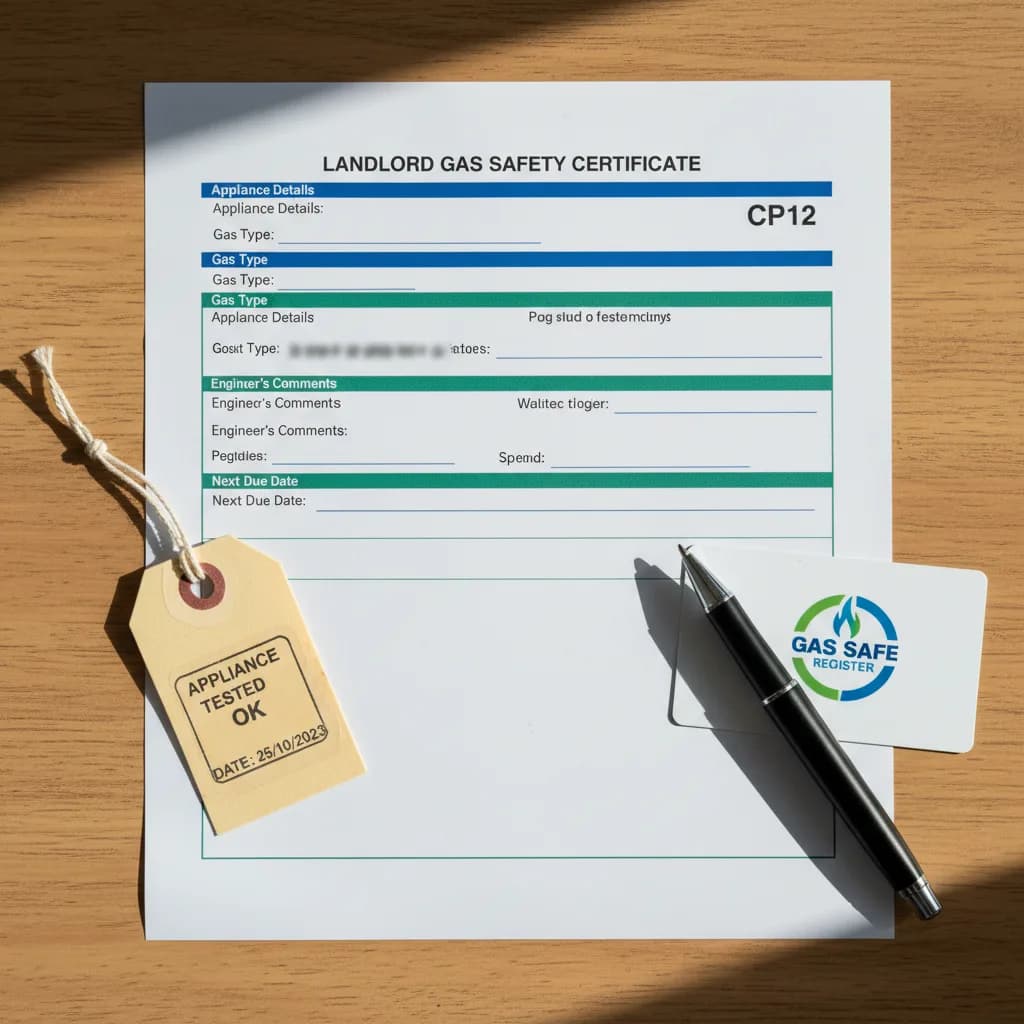
A gas safety certificate, officially called a Gas Safety Record or CP12, is a legal document issued by a Gas Safe registered engineer after an annual inspection of all gas appliances, pipework, and flues in a rental property. It confirms every gas installation is safe to use.
It is a legal requirement under the Gas Safety (Installation and Use) Regulations 1998. It cannot be self-issued, only Gas Safe registered engineers can carry out the inspection and sign off the certificate.
What does the CP12 inspection cover?
A CP12 inspection covers
- All gas appliances owned by the landlord (boiler, cooker, hob, gas fire)
- All gas pipework throughout the property
- All flues, ventilation points, and chimneys connected to gas appliances
- Safety devices including flame supervision devices and cut-off valves
- Combustion performance and gas pressure
- Ventilation in rooms containing gas appliances
- Visual check for signs of leaks, corrosion, or unsafe installation
How often do you need a landlord gas safety certificate?
Every 12 months. The certificate expires exactly 12 months after the inspection date. You must provide a copy to tenants within 28 days of inspection, and to any new tenant before they move in. Keep records for at least 2 years.
Book up to 2 months early without losing validity
You can arrange the inspection up to 2 months before your current certificate expires without shortening its 12-month validity. Use this window to avoid gaps, especially useful if tenant access is tricky.
How much does a landlord gas safety certificate cost?
For most rental properties, a CP12 costs £65 to £110 in 2026. Prices vary by number of appliances, location, and whether you combine it with a boiler service. Our gas safety guide explains how much a gas safety certificate costs in more detail.
Typical CP12 costs, Lincoln and Lincolnshire, 2026
| Property / scenario | Estimated cost |
|---|---|
| Boiler only (1 appliance) | £55, £85 |
| Boiler + gas hob or fire | £75, £110 |
| Boiler + hob + fire | £95, £135 |
| CP12 + boiler service combined | £130, £175 |
| HMO or multi-appliance property | £150+ |
| Urgent / out-of-hours | + £30, £60 |
Penalties for not having a gas safety certificate
- Fines of up to £6,000 per offence at Magistrates Court
- Unlimited fines at Crown Court for serious cases
- Up to 6 months imprisonment for the most serious breaches
- Inability to serve a valid Section 21 eviction notice
- Potential invalidation of landlord insurance
- Criminal prosecution if a tenant is harmed due to unsafe gas
Part 2: EICR (Electrical Installation Condition Report)
5-year inspection
What is an EICR certificate?
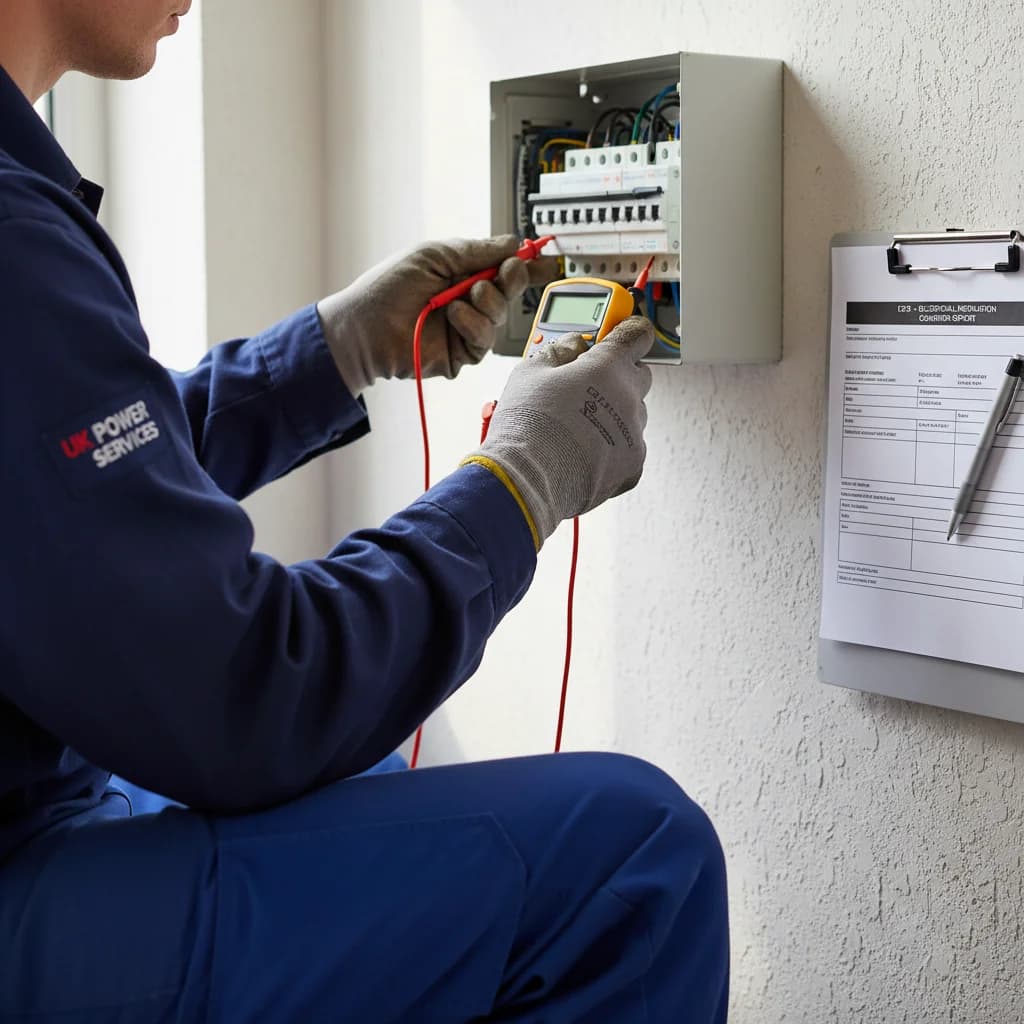
An EICR is the electrical equivalent of the CP12. A qualified electrician inspects and tests all fixed electrical installations in the property, wiring, sockets, fuse board, and associated fittings, and issues a report grading their condition.
The report classifies each item as Satisfactory or Unsatisfactory. Individual issues are coded C1 (danger, immediate action required), C2 (potentially dangerous), C3 (improvement recommended), or FI (further investigation required). Any C1 or C2 code means the overall report is Unsatisfactory and remedial work must be completed within 28 days.
Is an EICR a legal requirement for landlords?
Yes, in England, under the Electrical Safety Standards in the Private Rented Sector (England) Regulations 2020. The requirement applies to new tenancies from 1 July 2020 and all existing tenancies from 1 April 2021.
EICR legal requirements
- Inspect and test electrical installations at least every 5 years
- Obtain an EICR from a qualified and competent electrician
- Provide a copy to existing tenants within 28 days of inspection
- Provide a copy to new tenants before they move in
- Provide a copy to the local authority within 7 days if requested
- Complete C1 and C2 remedial work within 28 days (or sooner if the report specifies)
- Provide written confirmation of remedial work to tenants and local authority within 28 days
How much does a landlord EICR cost?
Typical EICR costs, Lincoln and Lincolnshire, 2026
| Property size | Estimated cost |
|---|---|
| 1-bed flat or bedsit | £120, £180 |
| 2-bed house or flat | £150, £220 |
| 3-bed house | £180, £280 |
| 4-bed house | £220, £350 |
| 5+ bed or HMO | £300+ |
| Remedial work (if required) | Quoted separately |
Penalties for not having a valid EICR
- Financial penalty up to £30,000 per breach, issued by the local authority
- Local authority can carry out remedial work and recover costs from the landlord
- Inability to serve a valid Section 21 eviction notice
- Potential invalidation of landlord insurance
- Civil claims from tenants if they suffer injury or loss from an unsafe installation
Gas safety certificate vs EICR, key differences
Side by side
CP12 vs EICR
Annual
CP12 Gas Safety
- Gas Safety Regulations 1998
- Every 12 months
- Gas Safe registered engineer
- Covers gas appliances, pipework, flues
- Typical cost £65 to £110 in Lincolnshire
- Up to £6,000 fine / prison for non-compliance
Every 5 years
EICR Electrical
- Electrical Safety Standards 2020
- Every 5 years
- Qualified electrician (NICEIC / NAPIT / ELECSA)
- Covers fixed wiring, fuse board, sockets
- Typical cost £120 to £280 in Lincolnshire
- Up to £30,000 fine for non-compliance
Worked example, Helen's CP12 + EICR bundle
Helen lets three Lincoln rentals: one all-electric flat, two with gas central heating. In May 2026 she books LWR Group to coordinate everything. We send one Gas Safe engineer to do both CP12s on the same day (£95 each, £190 total) and one NICEIC electrician to do all three EICRs on a separate day (£170 + £170 + £150 = £490). Total £680, all delivered within a week, digital copies emailed to Helen and her tenants. Helen sets all three EICR renewals into her calendar for May 2031 and the CP12 renewals for May 2027. Cost vs maximum exposure: £680 spend covered up to £108,000 of potential fines.
Bundle both to save money
Scheduling your CP12 and EICR at the same visit saves on call-out fees and access coordination. Add a boiler service and PAT testing and you can cover your full compliance checklist in one visit. LWR Group coordinates all of this for landlords across Lincolnshire.
Common questions
Quick answers to the questions landlords ask us most about CP12 and EICR. Tap any to expand.
Yes, if your property has gas. You need an annual CP12 for gas and a 5-yearly EICR for electrics. If your property is all-electric (no gas supply), you only need the EICR.
For gas safety, you must make reasonable attempts to gain access and document every attempt in writing. If access is persistently refused, you can apply to court for an access order. The same principle applies to EICR. Document everything, letters, emails, texts, in case of dispute.
Any C1 or C2 codes mean the report is Unsatisfactory. You must complete the required remedial work within 28 days (or the timeframe specified in the report if shorter). Get written confirmation from the electrician and provide it to tenants and the local authority within 28 days.
No. A new boiler comes with a Benchmark commissioning certificate but that is not a CP12. You still need a separate annual gas safety inspection covering all gas appliances in the property.
The Gas Safety Regulations 1998 apply across the UK, you need a CP12 everywhere. The Electrical Safety Standards 2020 (EICR requirement) apply to England only. Scotland has its own equivalent rules under the Housing (Scotland) Act 2006. Wales and Northern Ireland have separate regulations.
How LWR Group helps landlords stay compliant
We coordinate gas safety and EICR inspections for landlords and letting agents across Lincoln, Lincolnshire, and surrounding areas. You get one point of contact for all your compliance work:
For a complete overview of landlord legal obligations, see our landlord responsibilities checklist covering repairs, safety, deposits, and tenant rights.
LWR Group
Property Services · Lincoln & Lincolnshire