

EPC C by 2030: What Every Landlord Must Do Now
The government has confirmed all privately rented properties in England must reach EPC band C by 2030 for new lets, with fines of up to £30,000 for non-compliance. Here's what the target means, which improvements count, and your step-by-step action plan.
LWR Group
Property Services · Lincoln & Lincolnshire

Confirmed deadline: EPC C by 2030
All new privately rented tenancies in England must meet EPC band C by the end of 2030. All existing tenancies must comply by 2035. Fines of up to £30,000 apply for non-compliance. A new £10,000 spending cap limits what landlords must invest. The new Home Energy Model (HEM) replaces the current SAP methodology from October 2026, which means your property's rating may change.
If you own rental property in England, the EPC C target is the biggest regulatory change on the horizon. The government has confirmed the deadline, set the fine levels, and is replacing the entire methodology used to assess EPC ratings, all before 2030. Landlords who start planning now will spend significantly less than those who scramble at the last minute.
This is our practical guide: what the target actually means, what counts toward it, how much you'll need to spend, and what to do first.
This is a guide, not legal or surveyor advice
Every property is different. We recommend speaking to a qualified Domestic Energy Assessor before committing spend, and a property solicitor before relying on an exemption. Happy to recommend specialists in Lincoln and Lincolnshire we've worked with before.
Ask us for a recommendationAt a glance
Four Dates To Diary
- 01
Oct 2025
Spending counts
Improvement spending from this date counts towards the £10,000 cap, so don't delay starting work.
- 02
Oct 2026
HEM launches
Home Energy Model replaces SAP 2012. Properties may rate differently under the new methodology.
- 03
End 2030
New tenancies
Any new tenancy signed from this date must be at EPC band C or above. Fine up to £30,000.
- 04
End 2035
All tenancies
All existing ongoing tenancies must also be at EPC C or above by this date.
What does EPC band C mean?
The rating scale
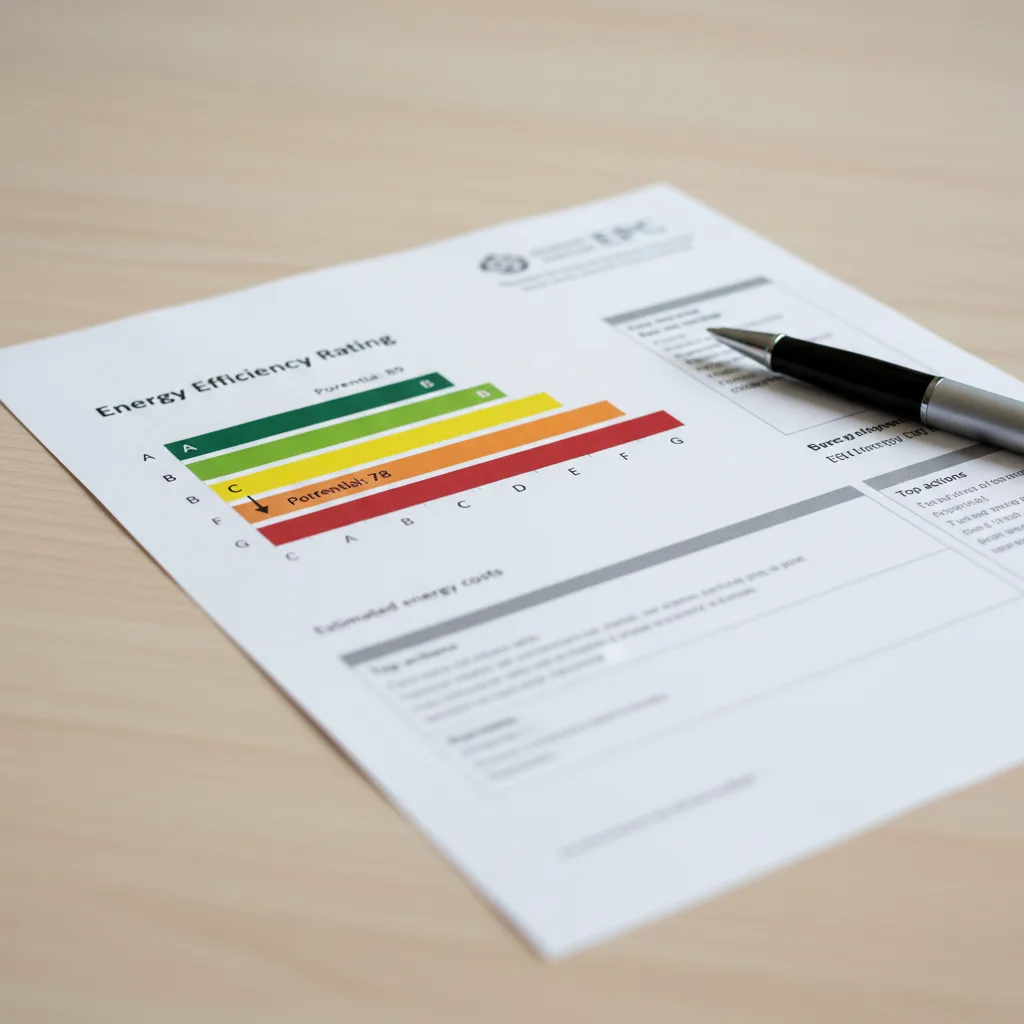
An Energy Performance Certificate (EPC) rates a property's energy efficiency on a scale from A (most efficient) to G (least efficient). Band C is the third-highest rating, broadly equivalent to a modern well-insulated property with gas central heating and decent windows. Most Victorian and Edwardian terraces, older semis, and pre-1980s flats currently sit at D or E.
The current legal minimum for privately rented property is EPC band E, anything below E cannot be let without a valid exemption. EPC C by 2030 raises that bar significantly, requiring meaningful improvement to a large proportion of England's private rented housing stock.
EPC band benchmarks, approximate current ratings by property type
| Property type | Typical current EPC | Likely gap to C |
|---|---|---|
| Post-2000 new build | B-C | None or minor |
| 1990s cavity wall semi | C-D | Minor to none |
| 1970s-80s semi / terrace | D | Moderate, usually insulation |
| Pre-1970s solid wall terrace | D-E | Significant, insulation + windows |
| Victorian terrace (unimproved) | E-F | Major works required |
| HMO (converted Victorian) | E-G | Major works, complex |
Worked example, Steve's mixed Lincoln portfolio
Steve owns four rentals in Lincoln: a 2020 new build (currently band B), a 1990s semi in North Hykeham (currently C), a 1970s terrace on Monks Road (currently D), and a Victorian terrace near the West End (currently E). He's compliant on two properties already. The 1970s terrace needs loft top-up and cavity wall insulation (roughly £1,200) to reach C. The Victorian terrace is the costly one, solid wall insulation will run £8,000 to £12,000 and may still leave it borderline, so Steve will need to weigh remediation against an exemption.
Need a Hand With Your Rental? See How We Help Landlords or Join the LWR Group.
When is the EPC C deadline for landlords?
Two-stage rollout

The government's confirmed target is a two-stage rollout:
- New tenancies from 2030: any new tenancy agreement signed must be for a property at EPC band C or above
- All tenancies from 2035: all existing ongoing tenancies must also be at EPC band C or above by 2035
- Exemptions apply where the required work costs more than the spending cap (£10,000) or where improvements are not technically feasible
- Landlords must register valid exemptions on the PRS Exemptions Register, unregistered exemptions do not protect against enforcement
The 2030 deadline for new lets is the most pressing. If you plan to re-let a property to a new tenant from 2030 onwards, that property needs to be EPC C. Properties that are already let with existing tenants have until 2035, but if the tenancy ends and a new one starts before 2035, the 2030 deadline kicks in.
Don't assume your current EPC will still be valid in 2030
EPCs are valid for 10 years, but the new Home Energy Model (launching October 2026) uses a different methodology, your property may score differently under HEM than under the current SAP system. It's worth getting a provisional HEM assessment before you rely on your current EPC rating.
What are the fines for non-compliance?
Enforcement
Local authorities can issue fines of up to £30,000 per property for letting a property that doesn't meet the minimum energy efficiency standard without a valid registered exemption. This is a substantial increase from the current £5,000 maximum under the existing MEES regime. The £30,000 figure applies per property, not per tenancy, so a portfolio landlord with five non-compliant properties faces potential exposure of £150,000.
Enforcement is likely to intensify as 2030 approaches, particularly in areas where local authorities have active housing teams. Estate agents and letting agents will also be required not to market non-compliant properties for let.
Worked example, portfolio exposure stack
Helen has 8 rentals in Lincolnshire. After her audit she finds 3 are already at C, 4 are at D (need cavity wall + loft top-up, around £1,500 each), and 1 is a solid-walled Victorian terrace at E (needs £12,000 of work). If Helen does nothing, her 2030 exposure on the 5 non-compliant properties is up to £150,000 in civil penalties. Her actual fix cost: £6,000 for the four D-rated properties plus an exemption registration on the Victorian (capped at £10,000 spend). Total invested: £16,000. Maximum saved: £134,000. That's before counting reputational damage, agent-marketing restrictions, and the impact on the property's resale value.
The £10,000 spending cap explained
The cap

The spending cap is the amount a landlord is required to invest in energy improvements before being allowed to claim an exemption. The current cap is £10,000 per property (spending that counts from October 2025 onward under the new regime).
In practice this means: if you spend £10,000 on qualifying improvements and your property still cannot reach EPC C, you can register an exemption and continue letting legally below band C. The exemption lasts for 5 years and must be renewed.
- The £10,000 cap is per property, not per tenancy
- Only spending on qualifying improvements counts, cosmetic works, decorating, and standard maintenance do not
- Spending from October 2025 counts toward the cap under the new rules
- You must still register the exemption on the PRS Exemptions Register, unregistered non-compliance is still enforceable
- Exemptions granted by surveyors (e.g. heritage buildings, conservation areas) have different rules
Worked example, hitting the cap on a Victorian
David owns a single solid-walled Victorian terrace in Lincoln city centre, currently EPC E. He commissions external solid wall insulation (£11,000) and loft top-up (£500), spending £11,500 total in 2027. The property reaches band D, still below C. Because David has spent more than the £10,000 qualifying-improvements cap, he registers a 'compliant improvement' exemption on the PRS Exemptions Register, evidencing his spend and EPC reassessment. The exemption is granted for 5 years. David continues to let the property legally. Without the exemption registration, he'd still be exposed to the £30,000 fine even though he spent the money, registration is what protects him.
Which improvements qualify toward EPC C?
What counts

Not all property improvements improve your EPC rating. The certificate specifically measures the energy efficiency of the building fabric and the heating/hot water system. The works most likely to move the dial:
Qualifying improvements and typical EPC impact
| Improvement | Typical EPC uplift | Cost range (2026) |
|---|---|---|
| Loft insulation (top-up to 270mm) | D→C possible | £300-£600 |
| Cavity wall insulation | Up to 1 to 2 bands | £700-£1,500 |
| Solid wall insulation (external) | Up to 2 bands | £8,000-£15,000 |
| Solid wall insulation (internal) | Up to 2 bands | £5,000-£10,000 |
| Double glazing (replacing single) | Minor uplift | £3,000-£8,000 |
| High-efficiency gas boiler replacement | Minor uplift | £2,000-£3,500 |
| Air source heat pump | Up to 1 to 2 bands | £8,000-£14,000 |
| Solar PV panels (3 to 4kWp) | Up to 1 band | £5,000-£8,000 |
| Floor insulation (suspended timber) | Minor uplift | £1,000-£3,000 |
| Smart heating controls | Minor uplift | £200-£600 |
For most D-rated properties, loft insulation (if not already at 270mm) plus cavity wall insulation is usually enough to reach C. For solid-walled Victorian properties at E or below, solid wall insulation is typically necessary, this is the most expensive upgrade and is where the £10,000 spending cap becomes most relevant.
Best value first
Top Four Upgrades by Impact-to-Cost
Loft top-up
From £300. Insulation up to 270mm depth, often enough to lift a borderline D to C on its own.
Cavity wall
£700 to £1,500. Up to 1 to 2 bands on a 1920s to 1990s property. The biggest single improvement on most semis.
Smart heating
£200 to £600. Minor uplift on its own but combined with insulation, often the tipping point to C.
Solid wall
£5,000 to £15,000. Up to 2 bands. The route for Victorian terraces, the cost where the £10k cap matters.
The Home Energy Model and why it matters
New methodology
SAP vs HEM
Old Methodology vs New
In use until Oct 2026
SAP 2012
- Standardised assumptions about heating use
- Simple wall U-value calculation
- No thermal-mass modelling
- No overheating-risk assessment
- EPCs issued under SAP valid for full 10 years
Live from Oct 2026
HEM
- Hour-by-hour energy use modelling
- Granular building-fabric assessment
- Thermal-mass + overheating risk included
- More accurate for solid-wall properties
- 2030 compliance assessed against this
What this means for landlords:
- Properties currently at C may drop to D under HEM, particularly older properties with specific construction types
- Some properties currently at D may improve under HEM, particularly those with certain insulation configurations
- EPCs issued under SAP 2012 remain valid for their 10-year term, but the compliance target in 2030 will be assessed against the HEM methodology
- Spending on improvements from October 2025 onwards counts under the new cap rules, so don't delay starting work
- Get a provisional HEM assessment on properties you're unsure about before investing in improvements based on the old SAP rating
HEM launches October 2026, get assessed beforehand
The switch to HEM in October 2026 means any EPC assessment from that point will use the new methodology. If your property is currently borderline C/D under SAP, commission an assessment before October 2026 to lock in your SAP rating, or commission a provisional HEM assessment to understand where you'll stand under the new system.
How to assess where your property stands now
Portfolio audit

- 1Check your existing EPC, log in to the government's EPC Register (epcregister.com) to find the current rating, its expiry date, and the improvement recommendations listed on the certificate
- 2Review the EPC recommendations, every EPC lists the improvements that would raise the rating and their estimated cost and impact
- 3Commission a new EPC if yours is close to expiry or if significant work has been done since it was issued
- 4Check your construction type, solid-walled properties (pre-1920 typically) have more limited improvement options than cavity-walled (1920s-1990s)
- 5Get energy improvement quotes based on the EPC's recommendations before October 2026 while the SAP methodology is still in use
Step-by-step action plan for landlords
Action plan

How LWR Group can help Lincoln and Lincolnshire landlords
Several of the most common and cost-effective improvements that move a property from D to C sit directly within LWR Group's scope of works, particularly for the building fabric and fabric improvements that don't require specialist energy contractors:
- Window and door upgrades, replacing single glazing or poor-quality double glazing with modern A-rated units. One of the more visible improvements and also contributes to the EPC rating
- Draught-proofing and sealing, closing up gaps around windows, doors, loft hatches, and pipework. Low cost, counts toward the EPC, and immediately improves comfort for tenants
- General fabric works, making good walls, ceilings, and floors in preparation for insulation installation by specialist contractors
- Pre- and post-improvement photography and documentation, essential if you need to evidence spending for an exemption
We work with a network of specialist insulation and renewable energy contractors and can coordinate the full improvement programme on your behalf, from initial assessment through to final EPC re-issue. If you have a portfolio of properties to work through before 2030, contact us for a portfolio assessment and improvement plan.
EPC C 2030 FAQ
The questions landlords ask us most about the 2030 EPC C target. Tap any to expand.
EPC band C. All new tenancies must be at band C or above from the end of 2030. All existing ongoing tenancies must reach band C by 2035. Properties below band C cannot be legally let without a registered exemption.
Up to £30,000 per property. Local authorities can issue civil penalty notices for letting a property that doesn't meet the minimum energy efficiency standard without a valid registered exemption.
£10,000 per property (spending from October 2025 counts). If a landlord spends up to £10,000 on qualifying improvements and still cannot reach EPC C, they can register an exemption and continue letting. The exemption lasts 5 years and must be renewed.
Not immediately, existing EPCs remain valid for their 10-year term. However, any EPC commissioned after October 2026 will use the new HEM methodology, which may rate your property differently. If you're borderline C/D, it's worth commissioning an assessment under the old SAP methodology before October 2026, or getting a provisional HEM assessment to understand your future position.
For most properties the cheapest route is loft insulation (if not already at 270mm depth) and cavity wall insulation. Together these can move a D-rated property to C for £1,500 to £3,000. Solar PV and heat pumps cost more but have larger impacts. For solid-walled Victorian properties, improvement options are more limited and more expensive.
LWR Group
Property Services Lincoln & Lincolnshire
More Reading
Related Articles
House Clearance Costs in Lincoln: What You Pay Per Van Load, and What Pushes It Up
Read article
Commercial Landlords: What Should Actually Be in a Lease Before a Tenant Moves In?
Read article
New Rules for Landlords in 2026: Section 21, Awaab's Law and EPC C
Read article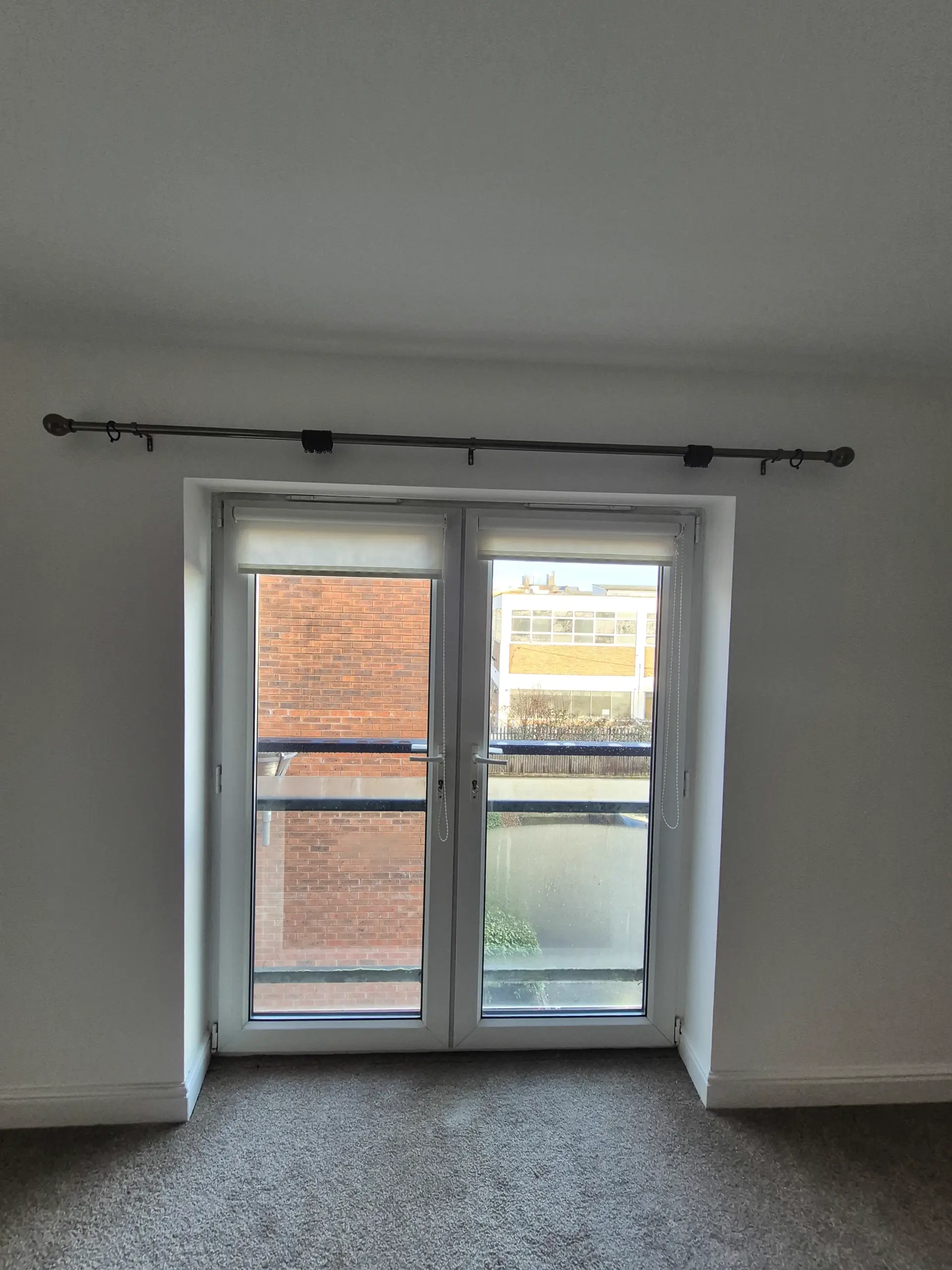
Handyman Prices UK 2026: Hourly Rates, Minimum Charges and What Jobs Cost
Read articleLincoln Landlords
Need a hand with a Lincoln rental? LWR Group handles everything from tenant changeovers to refurbishments: one call, one contractor.
Need Help With Your Property?
Skip the reading. Call us or WhatsApp for a free quote.