

What Is a Schedule of Dilapidations? A Tenant's Complete Guide
A schedule of dilapidations is the document your landlord's surveyor sends at lease end listing every repair you must carry out. Here's what it means, what the works involve, and what to do next.
LWR Group
Property Services · Lincoln & Lincolnshire
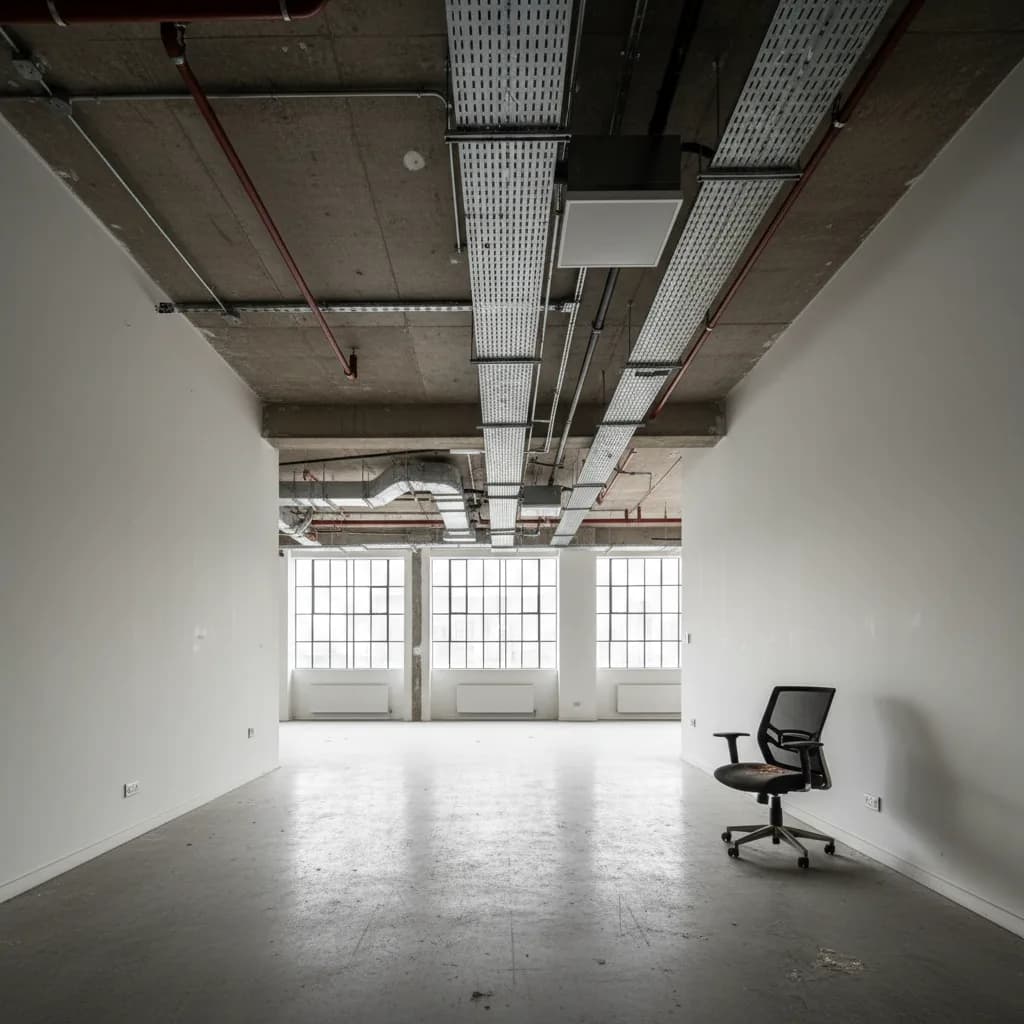
If you are approaching the end of a commercial lease, or you have just received a formal document from your landlord listing defects and required works, you are dealing with dilapidations. This guide explains exactly what a schedule of dilapidations is, how it is produced, what it typically requires, and, most importantly, what to do about it.
Key fact
Carrying out the works yourself is almost always significantly cheaper than paying the landlord's cash settlement figure. The schedule is a claim, not a final bill, and you have options.
What is a schedule of dilapidations?
A schedule of dilapidations is a formal legal document prepared by the landlord's chartered surveyor at or near the end of a commercial lease. It sets out every defect, repair, and reinstatement item the landlord believes the tenant is obliged to address under the terms of the lease, typically under 'repair', 'decoration', and 'reinstatement' covenants.
Each item on the schedule is cross-referenced to a specific clause in the lease, along with the specific remedy required and an estimated cost. The total of those estimated costs forms the landlord's claim against the tenant.
There are two common types: an interim schedule (issued during the tenancy, usually to prompt action before lease end) and a terminal schedule (the main document issued at or after lease expiry). Most tenants encounter the terminal schedule, often called a 'Scott Schedule' when it is in a structured table format for dispute or court proceedings.
Need a Hand With Your Rental? See How We Help Landlords or Join the LWR Group.
What is a dilapidations survey?
The survey
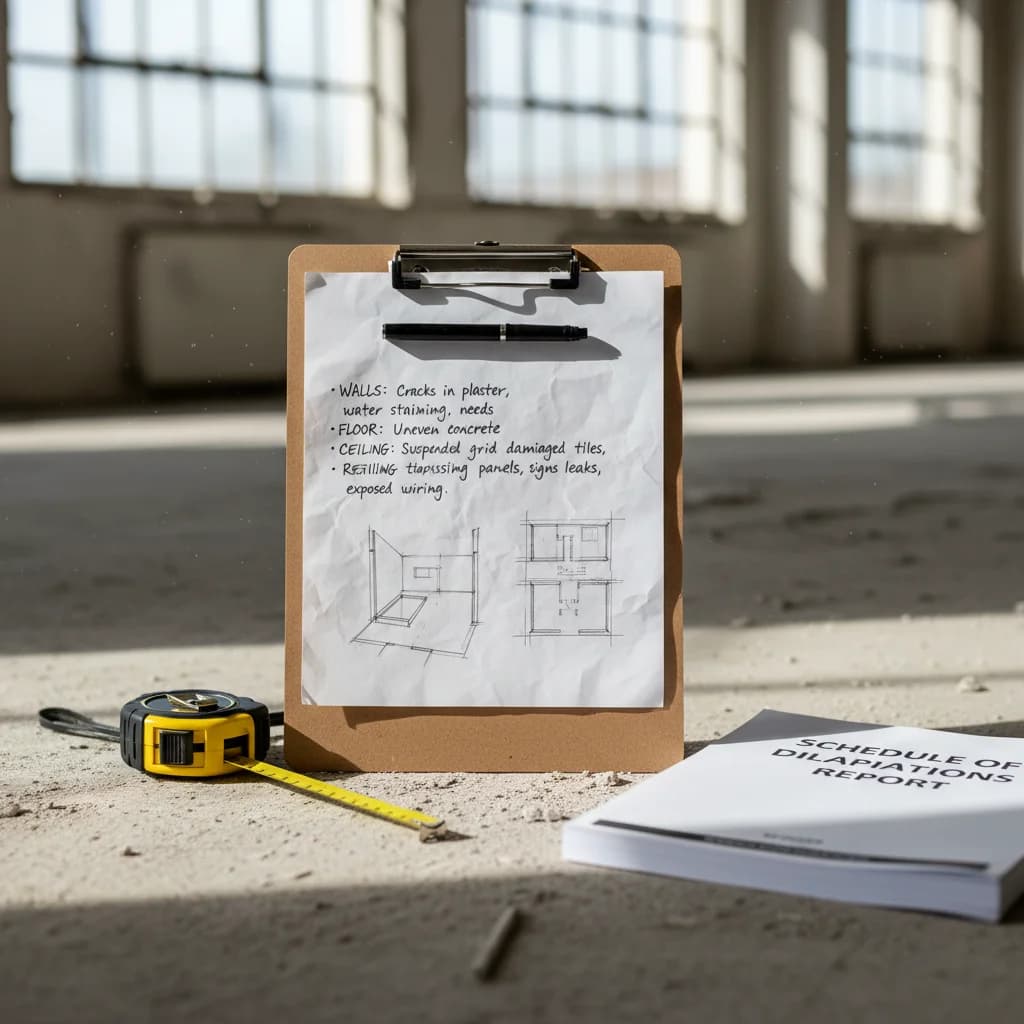
A dilapidations survey is the physical inspection of the property carried out by the landlord's surveyor, usually a RICS-qualified building surveyor, that produces the schedule. The surveyor walks the entire unit, comparing the current condition against the lease requirements and any photographic or written record of condition at lease start (the schedule of condition, if one exists).
The survey can happen while you are still in occupation (typically in the final 6 to 12 months of the lease) or after you have vacated. If you have a schedule of condition attached to your lease, a photographic record of the state of the property when you took it on, the surveyor must take this into account. Items that were already in poor condition at the start cannot be claimed against you.
Tenants are entitled to commission their own surveyor to respond to the schedule, a 'counter-schedule' or 'dilapidations response', which challenges each item claimed. This negotiation between surveyors is normal and often reduces the final settlement significantly.
What does a dilapidations report typically include?
A dilapidations report (used interchangeably with 'schedule of dilapidations') typically follows a structured format listing individual items, their location, the relevant lease clause, the required remedy, and an estimated cost. Common categories include:
The document will usually conclude with a Schedule of Condition comparison (if applicable), a Quantified Demand listing the total cost of the claim, and sometimes a Diminution Cap, a figure representing the maximum reduction in the property's value attributable to the disrepair, which caps the landlord's claim under section 18(1) of the Landlord and Tenant Act 1927.
What works are typically required?
Putting it right

In most commercial dilapidations cases across offices, retail units, and light industrial or warehouse premises, the bulk of the required works falls into four categories.
Most common dilapidations works
- Redecoration: full internal repaint to the original specification, usually ceilings, walls, woodwork and skirtings throughout
- Flooring: removal of any tenant-installed floor coverings and replacement to original or agreed standard
- Making good: filling all fixings, patching partition walls, repairing plaster where shelving, pipework or equipment was attached
- Cleaning and clearance: full commercial deep clean plus clearance of all tenant belongings, racking, waste, and fit-out materials
More complex schedules, typically on larger units or where significant fit-out has taken place, may also include partition removal, suspended ceiling reinstatement, lighting replacement, HVAC work, or external/roof repairs.
Should you do the works or pay a cash settlement?
Works or cash

This is the most important financial decision in the dilapidations process. The answer, in the vast majority of cases, is: carry out the works yourself.
The landlord's schedule includes contractor estimates compiled by the surveyor, often based on commercial schedule-of-rates pricing. These figures typically run 20 to 40% above what you would pay a direct contractor, because the landlord's surveyor is estimating on the landlord's behalf, not trying to find you the best price.
If you instruct a contractor directly to carry out the works before vacating, you pay only the actual cost of the works. The landlord receives the unit back in the required condition and has no basis for a cash claim. If you pay a settlement instead, you are paying the surveyor's estimate, which includes overhead, margin, and often additional professional fees. For a typical office or retail unit, the difference between doing the works and settling can be £5,000-£20,000 or more.
Practical tip
Get a fixed quote from a dilapidations contractor against the schedule before you decide whether to do the works or settle. Once you have the real cost in front of you, the comparison is simple.
How long do dilapidations works take?
The timeline depends on the size of the unit and the scope of works required.
- Small office or retail unit (up to 1,500 sq ft, light scope): 5 to 8 working days
- Medium unit (1,500 to 5,000 sq ft, standard redecoration and make good): 2 to 3 weeks
- Large unit or light industrial (5,000 to 20,000 sq ft): 3 to 6 weeks
- Complex fit-out removal or poor condition throughout: allow 6 to 10 weeks
A reputable dilapidations contractor will give you a fixed programme of works at quotation stage, start date, completion date, and a schedule tied to the individual items in the landlord's document. If they can't, find someone who can.
What to look for in a dilapidations contractor
Not all building contractors are set up to carry out dilapidations work properly. The key differences between a general maintenance contractor and one experienced in dilapidations are:
What a dilapidations contractor should provide
- The ability to quote directly against your schedule of dilapidations, line by line
- Multi-trade capability in-house, decoration, flooring, joinery, cleaning, and clearance under one programme
- Before and after photography on every line item in the schedule
- A written completion report suitable for submission to your landlord or solicitor
- Fixed price agreed before works begin, not an open-ended estimate
- Fast mobilisation, lease-end timescales are rarely flexible
- Public liability insurance appropriate for commercial properties
Dilapidations work is time-critical. The lease has an end date, and any works that run over can expose you to additional holding costs or a landlord claim for damages during the overrun period. Choose a contractor who gives you a fixed programme and sticks to it.
LWR Group, commercial dilapidations across Lincolnshire
LWR Group carries out the full schedule of dilapidations for commercial tenants across Lincolnshire, redecoration, flooring, making good, cleaning, and clearance. We quote directly against your schedule, work from a fixed programme, and provide full photo documentation on completion.
See our commercial dilapidations serviceFor more detail on how we handle commercial dilapidations works, including the process from receiving your schedule to handing back the keys, visit our dedicated page at /commercial-dilapidations.
LWR Group
Property Services Lincoln & Lincolnshire
More Reading
Related Articles
House Clearance Costs in Lincoln: What You Pay Per Van Load, and What Pushes It Up
Read article
Commercial Landlords: What Should Actually Be in a Lease Before a Tenant Moves In?
Read article
New Rules for Landlords in 2026: Section 21, Awaab's Law and EPC C
Read article
Handyman Prices UK 2026: Hourly Rates, Minimum Charges and What Jobs Cost
Read articleLincoln Landlords
Need a hand with a Lincoln rental? LWR Group handles everything from tenant changeovers to refurbishments: one call, one contractor.
Need Help With Your Property?
Skip the reading. Call us or WhatsApp for a free quote.