


Renting out a property in the UK in 2026 is more regulated than it has ever been, but the basic process is still very doable for a first-time landlord who's organised. Done well, it's a steady source of income. Done badly, it's an expensive lesson, fines for compliance failures alone can reach £30,000 per offence.
This guide walks through every step from deciding whether to let, all the way to your first rent payment landing, and the renewals you'll need to keep on top of. We've based it on the questions we hear every week from new landlords across Lincoln and Lincolnshire who use our property maintenance services.
This is a guide, not legal advice
Letting law moves quickly, the Renters' Rights Act came into force in May 2026 and the regime keeps tightening. We recommend you speak to a property solicitor or letting-agent specialist before signing your first tenancy. Happy to recommend someone in Lincoln or Lincolnshire we've worked with.
Ask us for a recommendationThe five non-negotiables
Five Documents You Must Have In Place
Gas Safety (CP12)
Annual gas safety check by a Gas Safe registered engineer. Mandatory before tenant move-in.
EICR
Electrical Installation Condition Report, valid 5 years. Required for new tenancies since July 2020.
EPC
Energy Performance Certificate, minimum band E today, band C from 2030 for new lets.
How to Rent
Latest gov.uk 'How to Rent' guide served to the tenant. Free, but missing it invalidates a Section 8 in court.
Smoke + CO alarms
Smoke alarms on every storey, CO alarm in any room with a fixed combustion appliance.
The big picture, what you're signing up for
What you're committing to
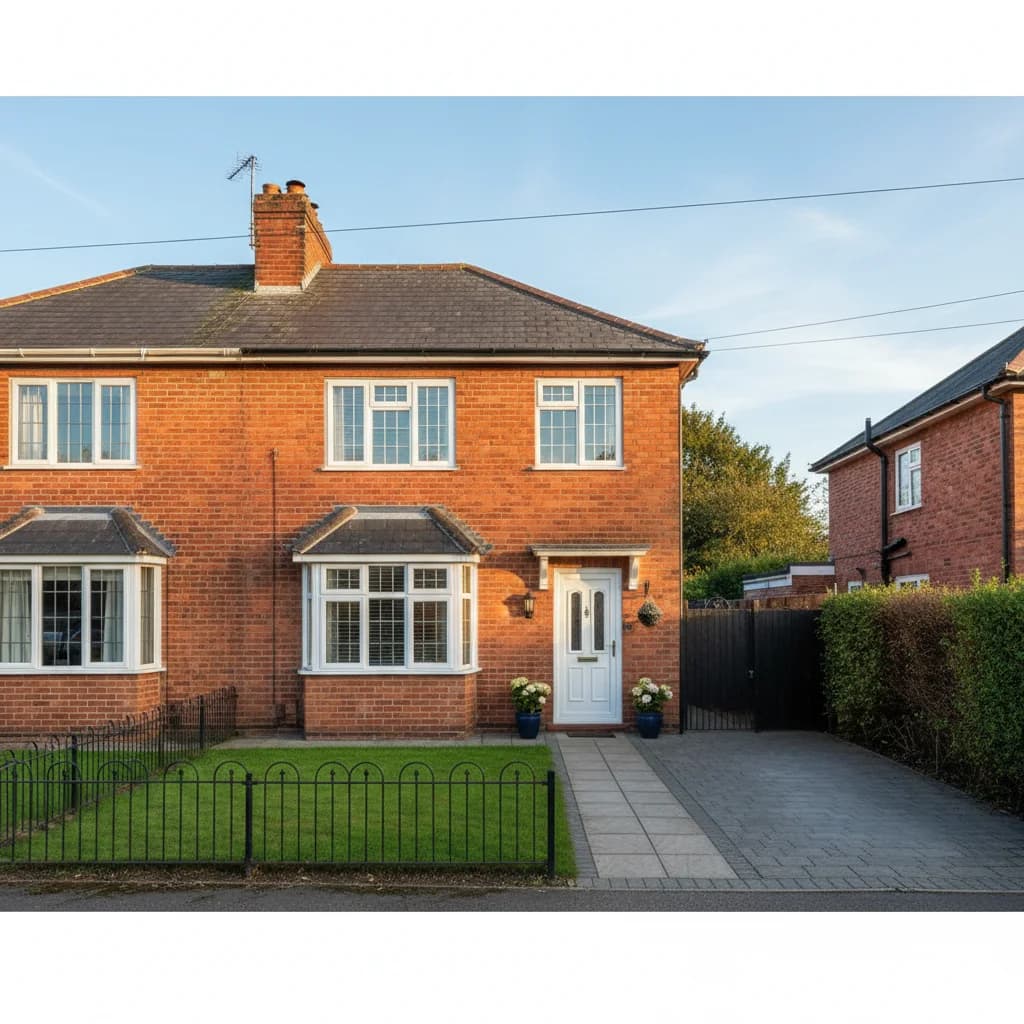
Before getting into compliance certificates and tenant referencing, it helps to know the shape of what you're committing to. As a UK landlord in 2026 you're effectively running a small business with regulatory obligations, employees-of-sorts (your tenants), and a property asset that needs maintenance, tax accounting, and legal compliance.
What it actually takes
Plan for around 5-10 hours of setup time before you can let, plus 2-4 hours per month of ongoing admin if you self-manage. If you use a letting agent, ongoing time drops to ~30 minutes a month but their fee is typically 8-12% of rent.
Step 1: Decide your letting strategy
Before doing anything else, you need to decide three things: how the property will be let, who you'll let to, and who manages it.
The big decision
Self-Manage vs Letting Agent
DIY approach
Self-Manage
- 0% management fee, all rent stays with you
- 2 to 4 hours of admin per month
- You handle compliance renewals, repairs, deposit disputes
- Direct relationship with the tenant
- Suits one or two properties locally
Outsourced
Letting Agent
- 8 to 12% of rent in management fee
- ~30 mins admin per month
- Agent handles compliance reminders, tenant queries, marketing
- Tenant deals with the agent, not you
- Suits multiple properties or non-local landlords
Self-managed vs letting agent
A letting agent typically charges 8-12% of monthly rent for full management, or a flat one-off fee (£250-£600) for tenant-find only. Full management covers tenant referencing, rent collection, maintenance coordination, and legal compliance. Tenant-find only places the tenant, then you take over.
- Self-manage: highest profit, biggest workload, full legal responsibility on you
- Tenant-find only: agent does the hardest part (finding & vetting), then hands over
- Full management: easiest but eats 10% of your rental income
First-time landlords often start with full management or tenant-find for the first tenancy, then move to self-management once they understand the process. There's no wrong answer, it depends on your time, geography (are you nearby?), and risk tolerance.
Single tenant, HMO, or short-let?
Three main letting models in the UK:
- Single Assured Shorthold Tenancy (AST): one household, 6-12 month tenancy. The standard model.
- House in Multiple Occupation (HMO): three or more unrelated tenants sharing facilities. Higher yield but extra licensing, fire safety, and management requirements.
- Short-let / holiday let / Airbnb: nightly or weekly. Higher yield but higher voids, more wear & tear, and requires planning permission in some areas (London specifically has a 90-night cap).
Buy-to-let mortgage permission
Critical: if your property has a residential mortgage, you cannot legally rent it out without your lender's permission. You'll need either consent-to-let (a temporary permission, usually 6-24 months) or to remortgage to a buy-to-let product. Letting without permission breaches your mortgage terms and can mean immediate repossession. Always get this in writing first.
Step 2: Get the property ready
Move-in ready

Before you can advertise, the property has to meet legal compliance standards. This is where most first-time landlords get caught out, the certificates aren't optional, and missing one can mean fines of £5,000-£30,000 plus the inability to evict a tenant later.
Required compliance certificates
Mandatory before tenancy starts
- Energy Performance Certificate (EPC), minimum band E (proposed C from 2028 for new tenancies). £60-£120, valid 10 years.
- Gas Safety Certificate (CP12), annual inspection by a Gas Safe registered engineer. £55-£110.
- Electrical Installation Condition Report (EICR), every 5 years, NICEIC-registered electrician. £100-£250.
- Smoke alarm on every storey + carbon monoxide alarm in any room with a fixed combustion appliance (gas boiler, gas fire, log burner). £15-£30 each.
- How to Rent Guide, must be served to the tenant at the start of every new tenancy in England (gov.uk PDF, free).
All five must be in place
If even one is missing on day one of the tenancy, you cannot serve a Section 21 notice later. This single oversight has cost many landlords years of unwanted tenancies. Get all five sorted before the tenant moves in.
5
mandatory certificates before any tenancy begins
UK Landlord law 2026
£30k
max fine per compliance breach
HHSRS enforcement
8 to 12%
typical letting agent full management fee
Industry average

We have detailed guides on the EICR (cost, what's checked, who can issue) and the Landlord Gas Safety Certificate (CP12), both worth reading before you book either inspection.
Furnishings, fittings and fire safety
If you're letting furnished, every soft furnishing supplied (sofa, mattress, armchair, cushions) must comply with the Furniture and Furnishings (Fire Safety) Regulations 1988. Look for the permanent fire safety label, beds and sofas without one cannot legally be supplied.
- Carpets and rugs are exempt from fire regs (but check for stains and wear)
- Pillows and bedding are exempt
- Garden furniture is exempt unless used indoors
- If buying second-hand, only buy from labelled stock, charity shops sometimes don't have labels
Cleaning, decoration and the inventory baseline
The condition the property is in when the tenant moves in becomes the baseline for the inventory at check-out. Tenants are entitled to return the property in the same condition, fair wear and tear allowed. So setting a high but realistic baseline matters.
- Professional end of tenancy clean before any new tenancy, typically £200-£550, pays for itself by reducing dispute risk
- Fresh paint in 'magnolia' or off-white throughout, neutral, easy to repaint, hides minor marks
- Carpet professional clean (or replace if heavily worn), £75-£175 for a 3-bed
- Good photo evidence of every room, appliance, and existing damage, date-stamped
- Detailed inventory document signed by both parties
We provide turnaround services across Lincoln and Lincolnshire that bundle cleaning, painting, flooring, and any minor repairs into one quote with one invoice, useful if you're getting the property ready remotely.
Step 3: Set the rent
How to research the local market
Two free tools cover most of what you need: Rightmove and Zoopla. Search 'Properties to rent in [your postcode]' filtered to your number of bedrooms and similar property type. Look at the asking rents for what's currently available, then check 'Sold' or 'Let' tabs to see what's actually achieved (they're sometimes 5-10% below asking).
Cross-check with: HomeLet rental index for your region (free monthly report), local letting agents (call 2-3 for an opinion), and properties just let in your street/neighbourhood.
Yield, gross vs net, and the 1% rule
Two yield calculations to know:
- Gross yield = (annual rent / property value) × 100. A £150,000 property at £900/month = £10,800/year = 7.2% gross yield.
- Net yield = (annual rent − annual costs) / property value × 100. After mortgage, insurance, maintenance, agent fees and tax, expect 2-4% net for most UK properties.
The classic '1% rule', monthly rent should be at least 1% of property value, is a US convention that mostly doesn't work in the UK. Most UK rentals deliver 0.5-0.7% per month and rely on capital appreciation for the rest of the return. Don't expect to match the 1% rule outside of cheap northern England or specific high-yield areas.
Step 4: Find a tenant legally
The legal flow

Marketing the property
If self-managing, list on:
- OpenRent, landlord-direct portal, ~£29 fee, listings appear on Rightmove and Zoopla
- SpareRoom, for HMOs and rooms
- Facebook Marketplace and local groups, slower-quality leads, no fee
- Local letting agents (tenant-find only), best for portfolio landlords or tricky properties
Tenant-find-only via a local agent typically costs £250-£600 and gets you the agent's tenant database, viewings handled, and references. For a single property, this is often the best value option, much cheaper than full management but skips the hardest part.
Right to Rent checks
Since 2014, all landlords in England must check that prospective tenants have the legal right to live in the UK. You verify their immigration status using the gov.uk Right to Rent online checking service or by examining original documents (passport, BRP, etc).
- Must be done before the tenancy starts
- Must be done for every adult occupier, not just the named tenant
- Penalty for failure: £80 first offence, £500 per occupier on repeat
- If you use a letting agent, they can do this on your behalf, confirm in writing they've completed it
Reference and credit checks
A proper tenant reference covers: previous landlord (rent payment history), employer (income, employment type), credit check (CCJs, bankruptcies, missed payments). Most landlords use a referencing service like HomeLet, Goodlord, or Endsleigh, typically £20-£40 per tenant, paid by you (you can no longer pass referencing fees to tenants since the Tenant Fees Act 2019).
Deposit protection (DPS, MyDeposits, TDS)
Tenant deposits in England and Wales must be protected within 30 days of receipt in one of three government-approved schemes:
- Deposit Protection Service (DPS), free custodial scheme, DPS holds the money
- MyDeposits, free or insurance-backed (you hold the money)
- Tenancy Deposit Scheme (TDS), same model as MyDeposits
Failing to protect a deposit means you cannot serve a Section 21 notice and the tenant can sue for 1-3× the deposit. Maximum deposit you can take from a tenant is 5 weeks' rent (or 6 weeks' if annual rent is over £50,000). Holding deposits are limited to 1 week's rent.
Step 5: Sign the tenancy & move-in day
Day one

AST tenancy agreement essentials
The Assured Shorthold Tenancy (AST) is the standard tenancy in England and Wales. Use a current 2026 template, old templates often don't comply with the Tenant Fees Act 2019 or the Renters' Rights Bill (2025/26). Free templates from the National Residential Landlords Association (NRLA), the gov.uk model agreement, or your letting agent.
Key clauses to include: rent amount and payment date, deposit amount and protection scheme, tenancy term (typically 6 or 12 months fixed term then statutory periodic), notice periods, repairs responsibility split, prohibited activities (subletting, short-letting, smoking, pets, be specific), break clause if any.
Inventory and check-in protocol
On move-in day, walk through the property with the tenant. Use a written inventory document plus photos and time-stamped video. Both sign each page. The inventory is your primary defence against deposit disputes, without it, deposit deductions are very hard to enforce.
Outsource the inventory
Independent inventory clerks charge £80-£200 for a full report. Worth it for portfolio landlords or anyone who's not local. Their report is treated as more impartial in disputes than landlord-self-prepared inventories.
Step 6: Manage the tenancy
Ongoing admin

Repairs and reactive maintenance
Landlords are responsible for: structure, exterior, heating and hot water, plumbing, drainage, gas appliances, electrical wiring, and any appliances you supply. Tenants are responsible for: keeping the property reasonably clean, minor consumables (light bulbs, fuses), garden maintenance if specified in the agreement, anything they damage themselves.
Set up a clear reporting channel from day one (email, WhatsApp, online form). Respond within 24-48 hours. Keep a maintenance log with dates, costs, and contractor invoices, useful for tax and disputes.
Rent collection and arrears
Standing order is the standard rent payment method. Set the date for the day after the tenant's payday so they always have funds. If rent is late, contact the tenant within 3-7 days, most arrears are resolved at this stage with no drama.
If rent stays unpaid for 14+ days, document the arrears in writing (email is sufficient). At 2 months in arrears, you can serve a Section 8 notice (the eviction route for rent arrears). Don't wait too long, arrears compound quickly.
Annual compliance renewals
Recurring compliance to diary now
- Gas Safety Certificate (CP12), annual, before expiry of previous one
- EICR, every 5 years
- EPC, every 10 years
- Smoke and CO alarm tests, annual (and at start of each new tenancy)
- How to Rent guide, re-issue at the start of every new tenancy or fixed-term renewal
- Tenant deposit re-protection if you renew the AST
Step 7: End the tenancy
Section 21 vs Section 8 (and the Renters' Rights Bill changes)
Two routes to end an AST as a landlord:
- Section 21 (no-fault): currently 2 months' notice, can only be served after the fixed term, no reason needed. Being abolished by the Renters' Rights Bill in 2026, once enacted, all tenancies become periodic by default and must use Section 8.
- Section 8 (with grounds): used when there's a specific reason like rent arrears, anti-social behaviour, breach of tenancy. Notice period varies from 2 weeks (serious arrears) to 2 months.
The Renters' Rights Bill (passed in 2025, fully in force during 2026) significantly reshapes this. Section 21 will be abolished. All tenancies become rolling periodic. Landlords will use new mandatory and discretionary grounds via Section 8 only. Stay current on this, the rules are changing in real time.
The void turnaround, how to minimise it
A void period (the gap between one tenant leaving and the next moving in) costs you a month's rent for every month it runs. The faster you can flip the property back to market-ready, the better the yield.
We have a complete void property turnaround checklist for landlords, with the typical 1-2 week timeline broken down. Most voids can be turned around in 5-10 days with good coordination, and a single contractor handling cleaning, decoration, flooring, and minor repairs cuts that further.
Tax: a quick note for first-time landlords
Rental income is taxable. You declare it via Self Assessment to HMRC by 31 January each year. Allowable expenses (deductible from rental income before tax) include: mortgage interest (now restricted to a 20% tax credit, not a full deduction), agent fees, repairs, compliance certificates, insurance, council tax during voids, accountant fees.
Capital improvements (e.g. a new kitchen, an extension) are not deductible against rental income but can be offset against capital gains tax when you sell. A landlord-aware accountant typically pays for themselves in the first year, expect £300-£600 per property per year.
Common first-time landlord mistakes
Worked example, Sarah's first Lincoln let
Sarah inherits a 2-bed terrace in Lincoln in early 2026. She wants to let it. Step 1: she rings her residential mortgage lender (the inherited mortgage is in her name now) and gets written consent-to-let, valid 12 months. Step 2: orders a Gas Safe check (£90), EICR (£170), EPC (£80). Step 3: pays £300 for an end-of-tenancy clean and £400 for a fresh paint. Step 4: lists with OpenRent (£29) at £750 a month, gets 14 enquiries in 5 days. Step 5: references the top three with HomeLet (£90 total), accepts Liam, runs a Right to Rent passport check in person. Step 6: deposit (£865) into DPS within 30 days, prescribed information served by email same day, AST signed digitally. Step 7: inventory clerk for £120, keys handed over. Total setup: £1,109. First rent landed in week 6 of her decision to let.
First-time landlord FAQ
The questions first-time landlords ask us most. Tap any to expand.
Three steps: (1) make sure you can legally let the property (mortgage permission or buy-to-let mortgage in place); (2) get the five compliance certificates (EPC, CP12, EICR, smoke/CO alarms, How to Rent guide); (3) find a tenant via OpenRent / a letting agent / Facebook, run referencing, sign the AST, protect the deposit, and you're letting. Realistic timeline from decision to first rent: 4 to 8 weeks.
Setup costs typically run £600 to £1,500 for a first-time letting in 2026: EPC if you don't have one (£80), Gas Safe certificate (£90), EICR if not current (£170), tenant referencing (£25), professional clean (£300), inventory clerk (£120), and either a letting agent fee (£250 to £600) or self-managed marketing (£29 OpenRent listing). Annual ongoing costs: gas certificate renewal (£90), insurance (£120 to £300 landlord-specific), accountant (£300 to £600), and any maintenance.
For a standard single-tenancy property in England, no general national license. But three exceptions: (1) HMOs of five+ unrelated tenants need a mandatory HMO license; (2) some councils run 'selective licensing' schemes covering specific postcodes, check your council's website; (3) Wales requires all landlords to register with Rent Smart Wales. Scotland: register with the local authority. Northern Ireland: register with the NIHE landlord registration scheme.
Realistic UK average from listing to tenant moving in: 4 to 6 weeks. Faster if the property is well-priced, well-photographed, and in a high-demand area. Slower (8 to 12 weeks) for unusual properties, properties priced above market, or November/December (lowest letting season).
No, letting without permission breaches your mortgage terms. Lenders can demand immediate repayment or repossession, and your insurance is invalidated for any tenant-related claims. Always either get consent-to-let in writing (typically free or around £100, valid 6 to 24 months) or remortgage to a buy-to-let product.
Use an agent if: you're not local, you don't have time for tenant calls, you're letting your first ever property, or you're letting an HMO. Self-manage if: you live within 30 minutes of the property, you have evenings free for occasional repair calls, and you're confident on the legal compliance side. Many landlords use tenant-find-only services (one-off fee, no ongoing cut) as a middle ground.
Self-manage with OpenRent (£29 listing) is the cheapest legitimate route. Add: free tenancy template from gov.uk or the NRLA, free DPS deposit protection, HomeLet referencing at £25 to £40 per tenant. Total minimum setup outside of mandatory compliance certificates: under £100. Mandatory compliance is non-negotiable and adds £400 to £800 to setup.
Skipping the inventory. A landlord without a written inventory and dated photos almost always loses deposit disputes, the tenant's word is taken over the landlord's. Spending £80 to £200 on a professional inventory clerk for the first tenancy is one of the highest-ROI decisions you'll make as a new landlord.
If you're renting out a property in Lincoln or across Lincolnshire and want a single contractor to handle the move-out clean, decoration, flooring, garden tidy, and any minor repairs in one go, that's exactly what we do. One quote, one invoice, photo evidence on every job, ready for first tenant. Get in touch for a free property turnaround quote.
LWR Group
Property Services · Lincoln & Lincolnshire


