

Being a landlord in the UK comes with a significant set of legal responsibilities. Some are well-known, others catch landlords out, particularly those who are new to letting or who manage properties themselves without an agent.
This is a practical, comprehensive checklist of what UK landlords are legally required to do. We've written it based on what we see every day working with landlords and letting agents across Lincoln and Lincolnshire.
This is a guide, not legal advice
UK landlord law moves quickly, the Renters' Rights Act came into force in May 2026 and Awaab's Law is set to extend to private landlords, with no date set yet. We recommend you speak to a property solicitor or letting-agent specialist when a specific tenancy decision is on the line. Happy to recommend someone in Lincoln or Lincolnshire.
Ask us for a recommendation£30k
max fine for unlicensed HMO
Housing Act 2004
5 yrs
EICR required every 5 years
EICR Regs 2020
24hr
emergency repair response window
Best practice
Property condition and repairs
Section 11 duties

Under Section 11 of the Landlord and Tenant Act 1985, landlords must keep the structure and exterior of the property in repair, and ensure that installations for water, gas, electricity, sanitation, and heating are in proper working order. A full summary of these duties is available on the landlord legal responsibilities (GOV.UK) page.
Repairs responsibilities
- Maintain the structure: roof, walls, floors, windows, and external doors
- Keep plumbing, drainage, and sanitation in working order
- Maintain gas, electricity, and water supply installations
- Ensure heating and hot water systems are functional
- Fix any defects reported by tenants within a reasonable timeframe
- Respond to emergency repairs (total heating failure, major leaks, security breaches) within 24 hours
What counts as 'reasonable'?
There's no fixed legal definition of a 'reasonable' timeframe for non-emergency repairs. As a guide: urgent repairs should be dealt with within 1-3 days, routine repairs within 14-28 days. Document all response times, as they matter in disputes.
One Contractor For The Operational List See How We Help Landlords or Join the LWR Group.
Gas safety
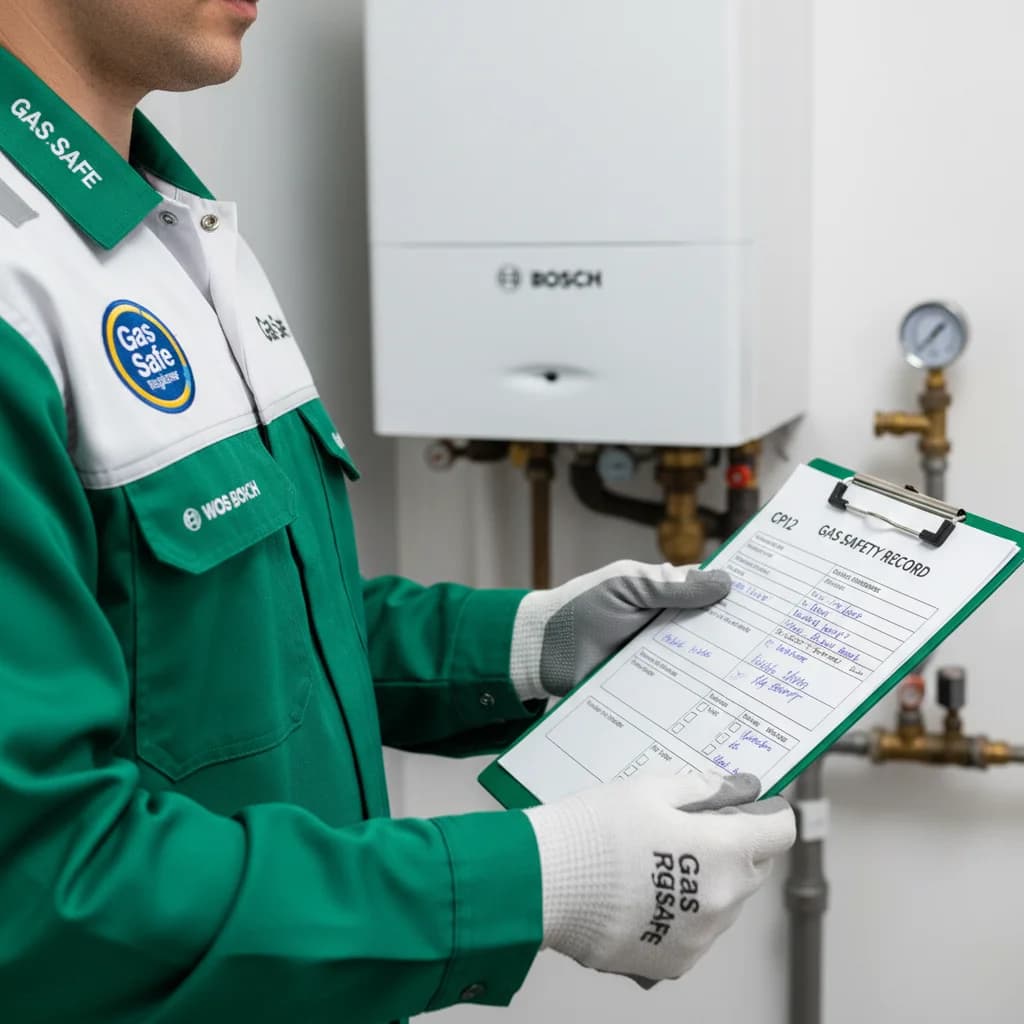
Annual CP12
Gas safety requirements
- Annual gas safety check by a Gas Safe registered engineer
- Provide a copy of the Gas Safety Certificate to tenants within 28 days of the check
- Provide a copy to new tenants before they move in
- Keep records of gas safety checks for at least 2 years
- Maintain all gas appliances, flues, and pipework in safe condition
Electrical safety
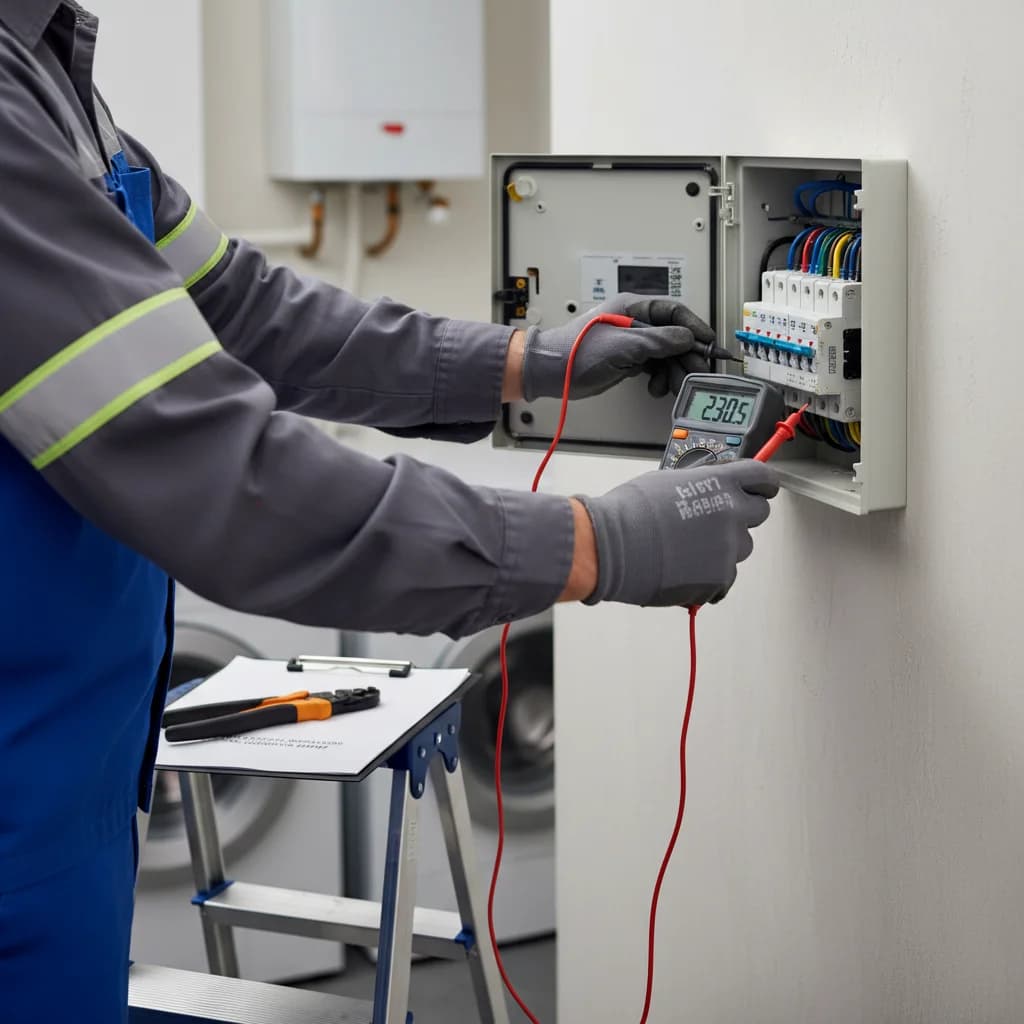
5-year EICR
Electrical safety requirements
- EICR (Electrical Installation Condition Report) every 5 years by a qualified electrician
- Provide a copy of the EICR to tenants within 28 days
- Provide to new tenants before they move in
- Carry out any remedial work identified in the report within 28 days (or as specified)
- Ensure all electrical appliances provided are safe and PAT tested
Fire safety
Alarms + escapes

Fire safety requirements
- Working smoke alarm on every floor of the property (required since 2015)
- Carbon monoxide alarm in any room with a fixed combustion appliance (since 2022 for all rented properties)
- Test alarms at the start of each new tenancy
- Ensure furniture meets fire safety regulations (Fire Safety Regulations 1988)
- Provide a clear fire escape route. Never block exits or communal areas.
Energy performance: EPC C by 2030
EPC requirements today
- Valid Energy Performance Certificate (EPC) rated E or above (since April 2020)
- Provide the EPC to tenants before they sign the tenancy agreement
- Renew the EPC every 10 years
Confirmed deadline: EPC C by 2030
All new privately rented tenancies in England must meet EPC band C by the end of 2030. All existing tenancies must comply by 2035. Fines of up to £30,000 apply for non-compliance. A new £10,000 spending cap limits what landlords must invest. The new Home Energy Model (HEM) replaces the current SAP methodology from October 2026, which means your property's rating may change.
At a glance
Four Dates To Diary
- 01
Oct 2025
Spending counts
Improvement spending from this date counts towards the £10,000 cap, so don't delay starting work.
- 02
Oct 2026
HEM launches
Home Energy Model replaces SAP 2012. Properties may rate differently under the new methodology.
- 03
End 2030
New tenancies
Any new tenancy signed from this date must be at EPC band C or above. Fine up to £30,000.
- 04
End 2035
All tenancies
All existing ongoing tenancies must also be at EPC C or above by this date.
The two-stage rollout and the £10,000 spending cap
- New tenancies from 2030: any new tenancy agreement signed must be for a property at EPC band C or above
- All tenancies from 2035: all existing ongoing tenancies must also be at EPC band C or above by 2035
- Exemptions apply where the required work costs more than the spending cap (£10,000) or where improvements are not technically feasible
- Landlords must register valid exemptions on the PRS Exemptions Register, unregistered exemptions do not protect against enforcement
- The £10,000 cap is per property, not per tenancy, and only qualifying improvements count, cosmetic works and standard maintenance don't
- If you spend £10,000 on qualifying improvements and the property still can't reach C, you can register an exemption and keep letting legally below band C. The exemption lasts 5 years and must be renewed
Local authorities can fine up to £30,000 per property for letting below the minimum standard without a valid registered exemption, per property, not per tenancy, so a portfolio landlord with five non-compliant properties faces potential exposure of £150,000.
Which improvements qualify
Qualifying improvements and typical EPC impact
| Improvement | Typical EPC uplift | Cost range (2026) |
|---|---|---|
| Loft insulation (top-up to 270mm) | D→C possible | £300-£600 |
| Cavity wall insulation | Up to 1 to 2 bands | £700-£1,500 |
| Solid wall insulation (external) | Up to 2 bands | £8,000-£15,000 |
| Solid wall insulation (internal) | Up to 2 bands | £5,000-£10,000 |
| Double glazing (replacing single) | Minor uplift | £3,000-£8,000 |
| High-efficiency gas boiler replacement | Minor uplift | £2,000-£3,500 |
| Air source heat pump | Up to 1 to 2 bands | £8,000-£14,000 |
| Solar PV panels (3 to 4kWp) | Up to 1 band | £5,000-£8,000 |
| Floor insulation (suspended timber) | Minor uplift | £1,000-£3,000 |
| Smart heating controls | Minor uplift | £200-£600 |
Best value first
Top Four Upgrades by Impact-to-Cost
Loft top-up
From £300. Insulation up to 270mm depth, often enough to lift a borderline D to C on its own.
Cavity wall
£700 to £1,500. Up to 1 to 2 bands on a 1920s to 1990s property. The biggest single improvement on most semis.
Smart heating
£200 to £600. Minor uplift on its own but combined with insulation, often the tipping point to C.
Solid wall
£5,000 to £15,000. Up to 2 bands. The route for Victorian terraces, the cost where the £10k cap matters.
The Home Energy Model, replacing SAP from October 2026
SAP vs HEM
Old Methodology vs New
In use until Oct 2026
SAP 2012
- Standardised assumptions about heating use
- Simple wall U-value calculation
- No thermal-mass modelling
- No overheating-risk assessment
- EPCs issued under SAP valid for full 10 years
Live from Oct 2026
HEM
- Hour-by-hour energy use modelling
- Granular building-fabric assessment
- Thermal-mass + overheating risk included
- More accurate for solid-wall properties
- 2030 compliance assessed against this
HEM launches October 2026, get assessed beforehand
If your property is currently borderline C/D under SAP, commission an assessment before October 2026 to lock in your SAP rating, or commission a provisional HEM assessment to understand where you'll stand under the new system.
Step-by-step action plan
EPC band C. All new tenancies must be at band C or above from the end of 2030. All existing ongoing tenancies must reach band C by 2035. Properties below band C cannot be legally let without a registered exemption.
Up to £30,000 per property. Local authorities can issue civil penalty notices for letting a property that doesn't meet the minimum energy efficiency standard without a valid registered exemption.
£10,000 per property (spending from October 2025 counts). If a landlord spends up to £10,000 on qualifying improvements and still cannot reach EPC C, they can register an exemption and continue letting. The exemption lasts 5 years and must be renewed.
Not immediately, existing EPCs remain valid for their 10-year term. However, any EPC commissioned after October 2026 will use the new HEM methodology, which may rate your property differently. If you're borderline C/D, it's worth commissioning an assessment under the old SAP methodology before October 2026, or getting a provisional HEM assessment to understand your future position.
For most properties the cheapest route is loft insulation (if not already at 270mm depth) and cavity wall insulation. Together these can move a D-rated property to C for £1,500 to £3,000. Solar PV and heat pumps cost more but have larger impacts. For solid-walled Victorian properties, improvement options are more limited and more expensive.
Damp, mould, and Awaab's Law
Damp and mould are classified as hazards under HHSRS. Landlords must investigate and address reports of damp or mould promptly. Awaab's Law (currently applying to social housing, expected to extend to private sector) sets strict response timescales.
Damp and mould duties
- Respond to tenant reports of damp or mould promptly, in writing
- Investigate the cause. Don't assume it's tenant lifestyle.
- Commission a professional survey if the cause is unclear
- Fix the root cause, not just the visible mould
- Document all inspections, actions, and communications
Deposit protection
Deposit requirements
- Protect the deposit in a government-approved scheme within 30 days
- Provide the tenant with prescribed information about the scheme within 30 days
- Return the deposit within 10 days of agreement on deductions (or referral to dispute resolution)
- Only deduct for damage beyond fair wear and tear, and always with photographic evidence
Right to Rent checks
Pre-tenancy check

Right to Rent
- Verify the immigration status of all adult tenants before the tenancy starts
- Keep copies of identity documents for the duration of the tenancy plus 12 months
- Repeat checks for tenants with time-limited permission to stay
Worked example, Mark's first compliance audit
Mark inherits a 3-bed Lincoln semi in early 2026 from his late father. He intends to keep letting it. Day 1 he runs a paper audit: gas safety (expired 4 months ago, illegal to relet without renewal), EICR (last done 2021, valid until 2026 only, needs booking), EPC (rated D, expires 2028, will need to hit C by 2030). Day 2 he books all three: £90 CP12 the same week, £170 EICR the following Monday, EPC reassessment scheduled for after the planned loft insulation upgrade. Total compliance spend to bring the property current: £260 in week one. Without this audit, Mark would have been letting illegally and unable to use Section 8 if anything went wrong.
Who Is Responsible for What: Common Grey Areas
- Painting and decorating: landlord responsible for maintaining a reasonable standard; tenants may be responsible for damage they cause
- Carpets: no legal obligation to replace on a schedule, but must not be a hazard or make the property unfit
- Gardens: typically the tenant's responsibility to maintain, but the landlord's to ensure it's in a reasonable state at the start
- Pest control: landlord responsible if caused by a structural defect; tenant responsible if caused by poor hygiene
- Mould: landlord responsible unless solely caused by tenant lifestyle (and you must prove that)
- Lightbulbs and batteries: generally the tenant's responsibility during the tenancy
If you need help keeping your properties compliant and well-maintained in Lincoln or Lincolnshire, we handle everything from end of tenancy cleaning and painting to damp surveys and full property turnarounds. If you're getting a property ready to let for the first time, see our guide to preparing a rental property for tenants. One point of contact for all your property maintenance needs.
LWR Group
Property Services · Lincoln & Lincolnshire